

Project Kickoff Guide: 15 Steps For Success In 2026

New projects can sometimes start off a bit wonky because we dive straight into the project without getting to know the client or the tacit, latent, and informal requirements we need to fully understand what needs to be done to succeed.
Fundamentally, it’s about alignment: the project kickoff is an opportunity to establish common goals and the purpose of the work, whether the project is external or an internal one.
What Is A Project Kickoff?
Project kickoff is a critical project management activity that involves preparing the project team members and the client team on expectations, communication, and collaboration for the project. It is part of the project initiation phase of the project life cycle.
It informs the project planning phase and helps your team and client align on details like timelines, project management methodology, and success metrics.
Most kickoffs require a series of meetings, both internal and client-side. If your project doesn’t have a client, kickoffs are still necessary and should involve all project stakeholders and project sponsors.
What Is A Project Kickoff Meeting?
A project kickoff meeting is the first meeting between the project team, stakeholders, and clients to align on project goals, timelines, roles, workflows, and expectations before work begins.
You can think of the project kickoff meeting as having two parts: a pre-client kickoff meeting and a client kickoff meeting.
Here’s a little secret: you don’t want your first meeting with the client or key stakeholder to be the official kickoff meeting with the full client team and full project team. Instead, hold a pre-client kickoff meeting first. This is worthwhile for a few reasons:
- You’ll be able to nail down the project approval process without other attendees chiming in and keep the project approval process streamlined.
- You’ll be able to confirm the statement of work and project scope. If you leave this discussion to the official kickoff meeting, clients will inevitably try to include or exclude parts of deliverables that were already agreed upon, forcing you to change your project plan.
- You’ll be able to establish a positive relationship with the client right off the bat, setting the tone for a good rapport and working relationship as the project progresses.
- You’ll be able to iron out a few other important details in advance, such as collaboration tools, what assets will be needed, and the kickoff meeting agenda.

What Is The Purpose of a Kickoff Meeting?
The purpose of a project kickoff meeting is to get alignment so the team can get to work on the project. There are multiple purposes to the meeting, all of which contribute to this overall goal of alignment.
- Introduce the team
- Create a shared understanding of the project background
- Ensure alignment on what a successful project looks like
- Get agreement on what exactly needs to be done
- Decide on how to work together effectively
Who Should Attend A Project Kickoff Meeting?
A successful kickoff meeting should include the people responsible for project delivery, approvals, communication, and decision-making throughout the project.
| Role | Why They Attend |
|---|---|
| Project manager | Leads the project, aligns timelines, and coordinates delivery workflows |
| Project sponsor | Confirms business goals, priorities, budget, and approvals |
| Project stakeholders | Share requirements, expectations, and success criteria |
| Project team members | Understand roles, responsibilities, timelines, and deliverables |
| Client representatives | Confirm communication expectations, approvals, and project objectives |
| Subject matter experts | Provide technical, operational, or strategic guidance where needed |
What To Cover In The Kickoff Meeting
There's a lot that you'll need to get through in your project kickoff meeting, so having a proper agenda is a must. Here's what you'll need to cover (use this as a blueprint for your agenda):
Think of this as your pre-flight checklist before the project officially takes off:
| ✓ | Project Kickoff Checklist |
|---|---|
| ✓ | Introduce the project team, stakeholders, and their roles |
| ✓ | Review the project background, goals, and success metrics |
| ✓ | Confirm the project scope, key deliverables, and project milestones |
| ✓ | Align on timelines, workflows, and the project management approach |
| ✓ | Review communication channels, reporting expectations, and meeting cadence |
| ✓ | Confirm the project approval process and decision-makers |
| ✓ | Identify project risks, dependencies, constraints, or resource concerns |
| ✓ | Confirm required tools, assets, documentation, and collaboration platforms |
| ✓ | Define next steps, action items, and immediate priorities |
| ✓ | Share kickoff notes, decisions, and follow-up materials after the meeting |
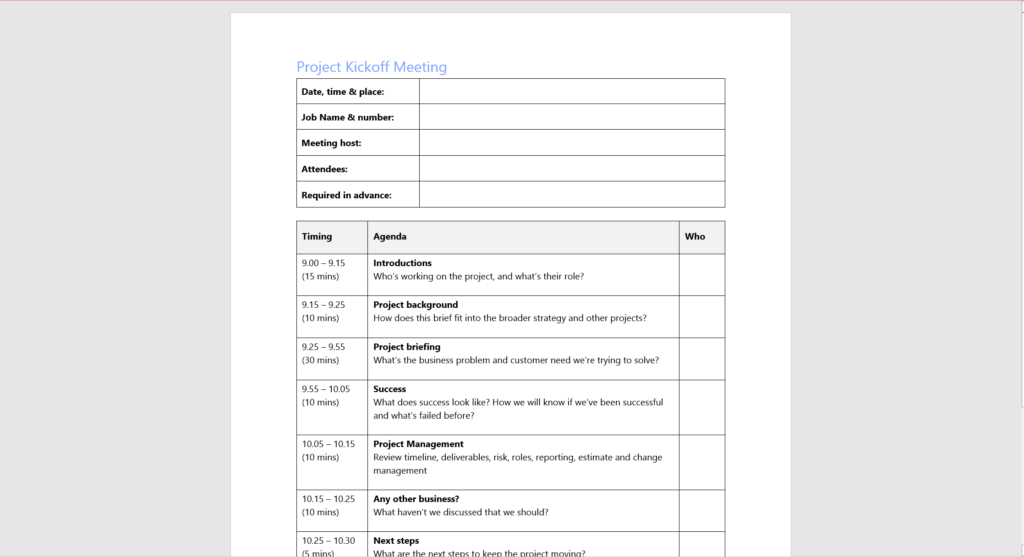
It's also a good idea to have a project kickoff meeting presentation, in the form of a slide deck, to accompany your agenda.
Project Kickoff Email
Once you’ve met with the client for a pre-kickoff and prepped your agenda for the client kickoff meeting, you’ll need to send out that all-important project kickoff email announcing when and where the meeting will be.
During the pre-client kickoff, it’s a good idea to get an idea of the client’s schedule for the kickoff meeting. Every project manager has their own strategy for scheduling meetings, but getting an idea beforehand doesn’t hurt, as you can use this to your advantage in your email.
Here’s a quick overview of what you should be including in your project kickoff announcement email:
- Quick recap of the pre-client kickoff meeting
- Date and time (don’t forget to send a calendar invite as well!)
- Location (or video meeting link, if not in person)
- A list of items the client will need to prepare
- Any remaining questions on the project team’s end that will need to be answered before the meeting
Try to send out the project kickoff email in advance, to ensure you leave the client with enough time to prepare the content and items that you asked for. Also, keep it fairly high-level—you don’t want to overwhelm the client with a lengthy email (they might not even read it!).
Don’t forget to follow up again after the kickoff meeting with an email. This one should include:
- Recap of the kickoff meeting
- List of next steps and due dates
- List of any remaining questions or concerns on your end or on the client’s end
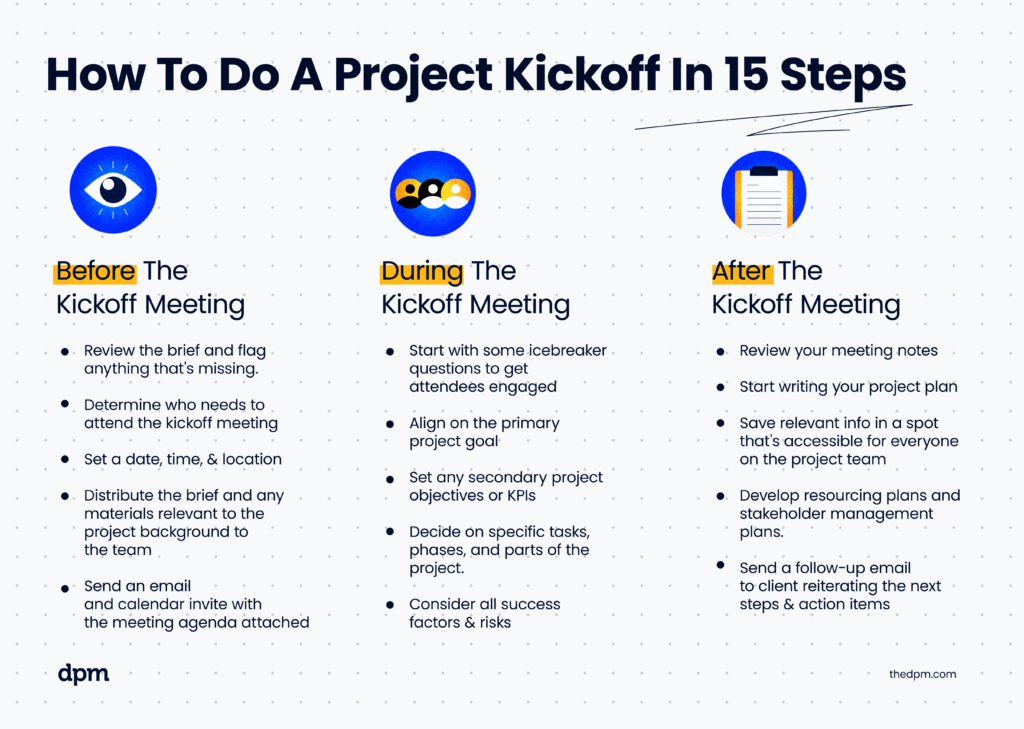
How To Do A Project Kickoff In 15 Steps
Here's what to do before, during, and after the project kickoff meeting to make sure you have a successful project kickoff.
Before The Kickoff Meeting
- Review the brief and flag anything that's missing.
- Determine who needs to attend the kickoff meeting
- Set a date, time, & location
- Distribute the brief and any materials relevant to the project background to the team
- Send an email and calendar invite with the meeting agenda attached
During The Kickoff Meeting
- Start with some icebreaker questions to get attendees engaged
- Align on the primary project goal
- Set any secondary project objectives or KPIs
- Decide on specific tasks, phases, and parts of the project
- Consider all success factors & risks
After The Kickoff Meeting
- Review your meeting notes
- Start writing your project plan
- Save relevant info in a spot that's accessible for everyone on the project team
- Develop a resource calendar and stakeholder management plans
- Send a follow-up email to the client reiterating the next steps & action items
Other Types Of Project Kickoffs
There are a couple of other types of kickoffs and kickoff meetings that you might have, aside from the usual client kickoff meeting.
| Kickoff Type | Purpose | Typical Attendees |
|---|---|---|
| Internal kickoff | Align the internal team on workflows, responsibilities, and the tools that will be used for managing communication, tracking bugs, and project scheduling. | Project manager, delivery team, internal stakeholders |
| Client kickoff | Align everyone on the purpose of the project, deliverables, approvals, and communication expectations before work begins. | Project team, client stakeholders, project sponsors |
| Agile kickoff | Establish the agile project workflow, sprint expectations, and how agile methodologies like Scrum will support delivery. | Scrum master, product owner, agile team members, stakeholders |
| Executive kickoff | Align leadership teams on business goals, budgets, risks, and priorities for managing projects effectively. | Executives, project sponsor, project leadership |
| Vendor or partner kickoff | Coordinate timelines, responsibilities, communication expectations, and project management software usage across external teams or partners. | Vendors, agencies, stakeholders, delivery leads |

Life too short for reading?
Get all our action-ready project kickoff templates and a crash course for just $49 USD.
What’s Next?
Displaying your leadership skills is an important part of doing a project kickoff well. You need to get both the client and the team on your side, which you can't do without being a good leader. For more on project kickoffs and other key project management processes, join DPM Membership to develop new skills and grow your career with the support of other digital project leaders.